July 5 – September 30, 2025
Narrowsburg Union
Narrowsburg, New York
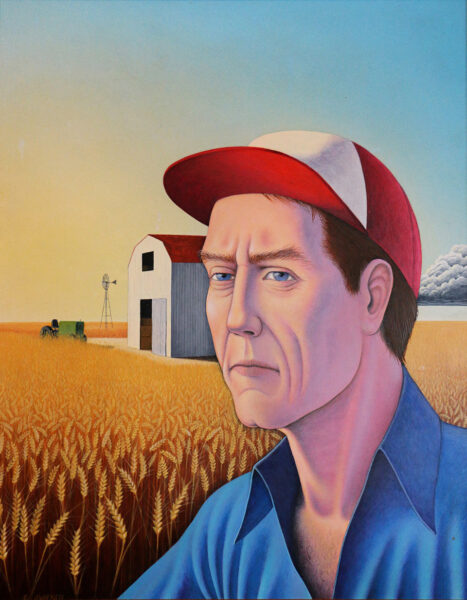
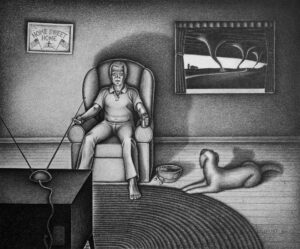
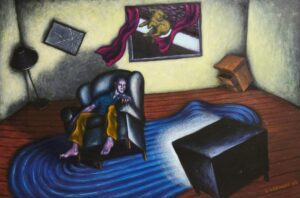
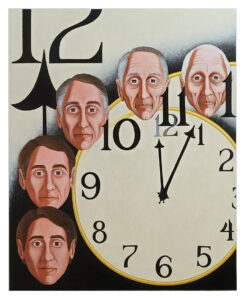
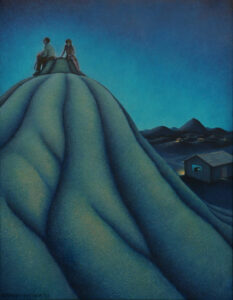
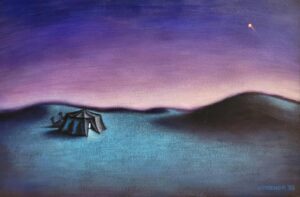
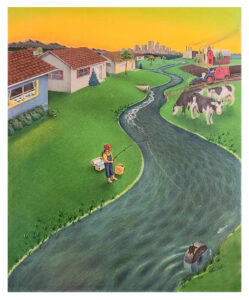
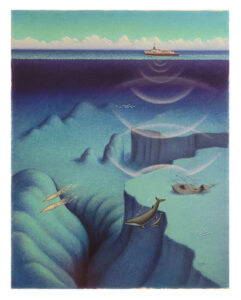
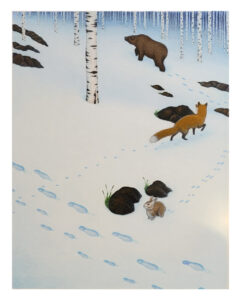
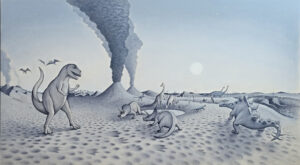
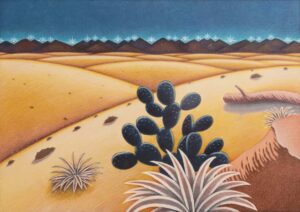
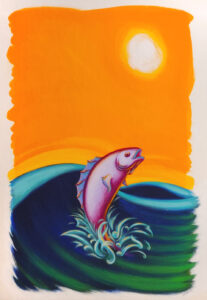
This summer, over a dozen illustrations by artist Jeffrey Wiener will be on exhibit at the Narrowsburg Union gallery space in Narrowsburg, New York. Many of these artworks have never been exhibited publicly. The exhibit runs from July 5th through September 30th. Opening is July 5th from 6pm – 7:30pm.
This summer, over a dozen of my illustrations will be on exhibit at the Narrowsburg Union gallery space in Narrowsburg, New York. Many of these artworks have never been exhibited publicly. I’ve been hoarding them. With each illustration commission in my career, I have gotten my original artworks back after printing, as per my contracts with clients.
This selection of original works from my collection were produced between the years 1987 – 1995. These paintings and drawings came from a period in my life when I was full of creative energy and had plenty of time to work. As a new resident Artist in New York City, fresh from the woods of Florida, I came here to make a name for myself in the field of traditional Illustration, where my heroes were: Braldt Bralds, Milton Glaser, James McMullen, and others.
I got a few jobs working in a few places doing boring design production. Underwear packaging, College textbook cover designs, some truly mind-numbing work. But then I was hired by a Hot young design firm called Sloan Millman Productions, with an office in the garment district, in one of those hulking large apparel factories turned into hip office spaces. They gave me a full suite of tools, plenty of elbow room to work, and a lot of great clients to work with.
Many of the works in this show are the original artworks commissioned by clients from Sloan/Millman Productions. I want to give a lot of credit for my bosses back then, Debbie Millman and Cliff Sloan. And also Noreen Pero, who was one of the best Creative Directors I ever worked with. They gave me a lot of freedom as an art director in their shop, and we had so many outlandish creative projects to play inside of. I would think of the most interesting illustration solutions, and they would let me do them myself – instead of hiring an outside artist. I’d go home and work on some of these paintings from start-to-finish under the tightest of turnarounds.
I parted ways with them to launch my first design firm Jeffrey Wiener Studio. I went to the large publishing and advertising businesses in NYC, picking up clientele such as The New York Times, Scholastic, The National Science Foundation, and Time Magazine Group, where many of these artworks were published in limited edition runs, distributed across industries and institutions as printed corporate media, as illustrations in print magazines to accompany editorial text, or in national advertising campaigns in newspapers and magazines.
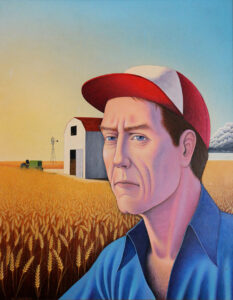
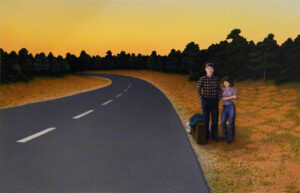
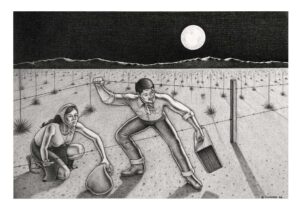
In those PRE-DIGITAL times, artists would personally bring their large portfolios of original works into the offices of publishers and advertising agencies in order to gather commissions. Illustrators would produce un-commissioned works to showcase their specific style and include them in their portfolios. I did this too. The Farmer and The Immigrants were two such pieces. I felt passionately about the plight of People, and channeled that into these works. I brought these works over to Time Magazine, New York Times, all the big publishers in New York.
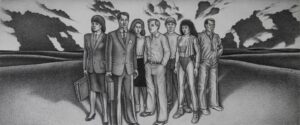
That’s how I got the New York Times OpEd commission for “The Class of ’72”. The art director really liked my drawings, and within a few days gave me a call to do a piece. They printed that drawing full-width of the OpEd page. The pay for illustration work was quite modest in those days. The “turn-around” times were usually quite tight, with delivery of the final artwork within a week to ten days upon receiving a publisher’s contract. But it was prestigious to get these commissions. It meant a lot to me to have achieved this. I came to New York to do just that.
Many of these works from the 1990’s were created with pencil, color pencils, and acrylic paints. In those days, with no Internet, and no children yet, there was plenty of time for me to focus on producing detailed works in traditional media. I could draw and paint to my heart’s content in those days. However, I never intended to limit myself to any one technology for producing works. I learned how to draw on stone and printed lithographs in college with that same mind-set. When the computer arrived, I adopted it as a new tool. And when digital drawing tablets came out, I began using them as my main drawing tool.
Adopting digital drawing tools allowed me to work faster, and iterate wider than anything traditional mediums could offer. Once I was able to draw works that looked identical to my traditional drawing, it was hard to go back to drawing on paper. It was too powerful to ignore. Of course, you still have to master the printing process, much as you would in Lithographic printing, in order to make a digital artwork look like traditional drawing or painting in the end.
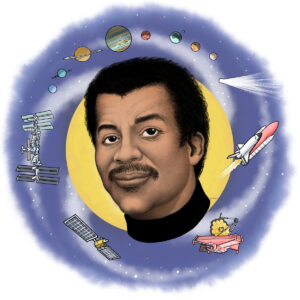
There is one new piece (“Portrait of Neil deGrasse Tyson”, iPad/Digital Print, 2025) that I chose to include in this collection as a good example of how digital skills can boost an artist’s speed and ability to iterate. This work began as a black and white digital pencil portrait for its foundation. But the final two works were delivered in square and horizontal formats, and in color with accessories, all ready for print AND web publication.
This exhibition contains wonderfully detailed compositions and narratives, all artworks of the highest quality as professional illustrations go. Their provenance highlights the exposure that these works received in the world of publishing before the internet era. More importantly, these works also showcase how artworks were created before the use of digital tools and Artificial Intelligence, where Artists were expected to develop complex images to accompany printed articles in magazines and newspapers.
“I’m still a working Illustrator… I get several commissions each year to create really interesting and entertaining imagery, and animations too! And whether I use traditional or digital skills to create those works, it’s still MY brain that is doing the hard work. That’s what my clients expect. This is something that cannot be replicated with AI. I am not too worried about the future for Artists. As long as we keep coming up with good ideas, people will pay us to make art.“
These days though, an illustration is a more complex production process. And the speed of turnaround has only gotten shorter. To help me keep up with the demand for my design and illustration products, I now use AI to help occasionally in the studio as an assistant. I recently turned to Open.AI and used the platform for creating some of the smaller pieces I needed to compose my illustration. Much like cutting out from magazines, I wanted lots of little airplanes! Jets of every size and shape right now. And I wanted it in black silhouette, like a woodcut. In short order, my graphic design assistant came back with a large supply of license-free graphics for me to assemble into the layout I delivered for approval before final production. A huge time savings for me.
That’s what makes this exhibition so remarkable. When I look at these works, I see so much time dedicated to creating these artworks. Each one has a story, each one involved multiple people making decisions. And each one is for sale. If you find yourself interested in one of these works, and you want to know more about the work, reach out to me. I’d be happy to chat with you about some of my favorite illustrations over my long career.